Ingredients 1 and 2 of 9
Nori and Wakame in Prostadine: Two Food Seaweeds at the Top of the List
Nori Yaki Extract Powder and Wakame Extract are the first two lines on the Prostadine info page. Both are edible seaweeds and both carry iodine. We found no human trial of either for the prostate or bladder, and neither amount is printed. The info page order is not a verified weight order.
Written by the Prostadine label deskUpdated
What they are01
Nori and wakame are foods first and supplements second
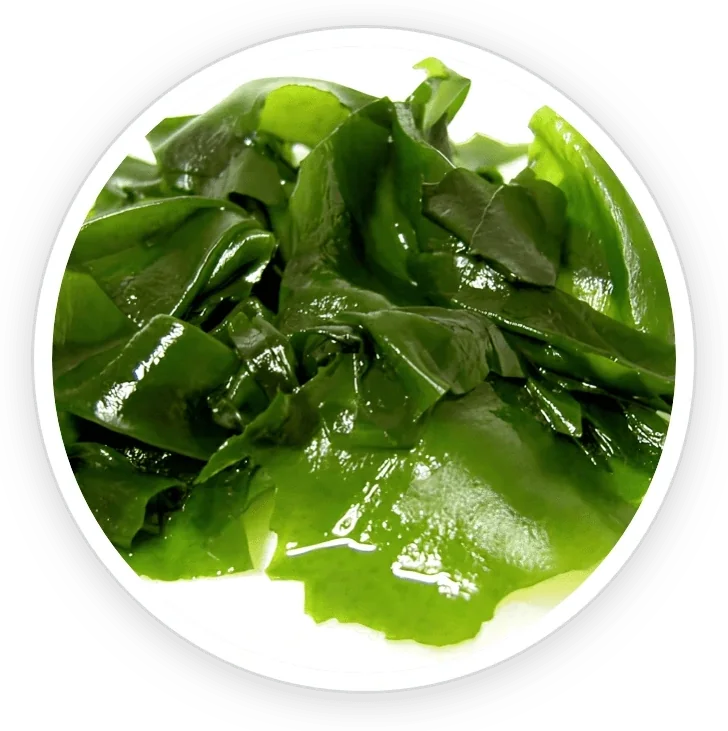
Nori is the dark sheet of red seaweed wrapped around sushi. Wakame is the soft green-brown seaweed floating in miso soup. Both have been eaten in East Asia for centuries, and both are sources of iodine.
On the Prostadine info page they are listed first and second as “Nori Yaki Extract Powder” and “Wakame Extract”. The first position may suggest they are the largest ingredients, but the info page order is not a Supplement Facts panel, and nothing proves it follows weight.
The info page gives nori the benefit lines “Supports prostate repair” and “Maintains healthy urinary system”, and wakame “Supports normal function of the bladder” and “Strong antibacterial properties”. None of the four is a use that the iodine in seaweed is known to serve, and we found no human study of either seaweed for these purposes.
| Name on the info page | Nori Yaki Extract Powder |
|---|---|
| What it is | Seaweed (Pyropia/Porphyra, red alga) |
| Place on the info page | 1 of 9 (not a verified weight order) |
| Amount in Prostadine | Not printed in any image we have |
| Amount used in research | Dried nori: 116 mcg iodine in 5 g (2 tbsp flakes) |
| Strength of evidence | No human trial for prostate or urinary use found |
| Marketed or traditional use | Food seaweed, eaten in sushi wraps |
| Main caution | Seaweeds carry iodine, and the amount varies widely. |
| Info-page benefit lines | “Supports prostate repair” / “Maintains healthy urinary system” |
| Name on the info page | Wakame Extract |
|---|---|
| What it is | Seaweed (Undaria pinnatifida, brown alga) |
| Place on the info page | 2 of 9 (not a verified weight order) |
| Amount in Prostadine | Not printed in any image we have |
| Amount used in research | No studied dose found |
| Strength of evidence | No human trial for bladder use found |
| Marketed or traditional use | Food seaweed, eaten in miso soup |
| Main caution | Iodine amount varies; ask a clinician if you have thyroid disease. |
| Info-page benefit lines | “Supports normal function of the bladder” / “Strong antibacterial properties” |
What is established02
Iodine: the real nutritional value of seaweed
The best-supported fact about edible seaweeds is that they carry iodine. The NIH lists 116 micrograms in 5 grams of dried nori flakes, about two tablespoons, and a range across all seaweeds of 16 to 2,984 micrograms per gram (NIH ODS, Iodine). The American Thyroid Association lists nori among dietary sources of iodine (ATA, Iodine deficiency).
Iodine is something most people need, and a seaweed sheet now and then is a practical way to get it. A salad of wakame or a sushi roll gives a modest amount, and the amounts in food are far below the 1,100 microgram upper limit for most meals (NIH ODS, Iodine).
The difference with a supplement is concentration. A powder or extract packs the iodine of many servings into a small dose, and when two more seaweeds and iodine itself share the bottle, the sum can climb. That is why the iodine and thyroid page and the iodine meter on the home page matter more than any single benefit line.
| Item | Iodine | What it means |
|---|---|---|
| Dried nori, 5 g (2 tbsp flakes) | 116 mcg | About three quarters of one day's need of 150 mcg (NIH ODS, Iodine) |
| Seaweed, per gram | 16 to 2,984 mcg | About a 190-fold spread between species (NIH ODS, Iodine) |
| Adult RDA | 150 mcg a day | The daily need (NIH ODS, Iodine) |
| Upper limit | 1,100 mcg a day | The tolerable intake for adults (NIH ODS, Iodine) |
The four lines03
What the info page claims and what we could verify
“Supports prostate repair”
Repair is a strong word for the prostate. The NIDDK describes BPH as a benign enlargement with aging and hormone changes suspected, and does not link diet to causing or preventing it (NIDDK, Enlarged Prostate (BPH)).
“Maintains healthy urinary system”
Dietary iodine supports the thyroid. We found no study linking nori to urinary health, so this line describes a hope, not a result.
“Supports normal function of the bladder”
No trial of wakame for bladder function turned up in our search. Bladder symptoms have many causes, and a doctor is the right first stop.
“Strong antibacterial properties”
Lab tests on extracts do not show what happens in a man's body. An infection of the urinary tract or prostate needs medical treatment, not drops (NIDDK, Prostatitis).
Prostadine: from $49 a bottle60 mL · 2 mL a day · free US shipping on 3 or 6 · 60-day money-back guarantee
See packsSafety04
Who should think twice, and what to ask
As food, seaweed is safe for most people. As concentrated powder in a supplement, the main issue is again iodine, with the same groups at risk: people with thyroid disease, older adults and pregnant or breastfeeding women (ATA, Excess iodine). The NIH adds that antithyroid medicines and some blood pressure medicines interact with iodine (NIH ODS, Iodine).
- If you have a thyroid condition, show the bottle to your doctor before the first dose.
- If you take a medicine for blood pressure or heart disease, ask a pharmacist whether iodine matters for it (NIH ODS, Iodine).
- If you eat seaweed often already, remember that the supplement adds to your food intake.
- If you notice new symptoms such as a racing heart, neck swelling or unusual tiredness, stop and tell a doctor.
None of these points means seaweed is a bad ingredient. They mean it is a potent one, in a bottle that does not print amounts.
Verdict05
What the evidence supports
What is in its favour
- Edible, familiar foods with a long record
- A genuine, measurable source of iodine (NIH ODS, Iodine)
What counts against it
- No human evidence for repair, bladder or antibacterial lines
- Amounts and extract type not printed
- Iodine adds up with three more sources on the label
Nori and wakame are the gentlest items on the list, and also the ones where the sales lines go furthest beyond the research. Read about the heavier seaweeds on the kelp and bladderwrack page.
- Iodine: Fact Sheet for Health Professionals. NIH Office of Dietary Supplements, 2024.RDA for adults is 150 mcg a day; the tolerable upper intake level is 1,100 mcg a day. Dried nori, 2 tablespoons of flakes (5 g): 116 mcg. Seaweeds range from 16 to 2,984 mcg per gram. High intakes can cause goiter, elevated TSH and hypothyroidism, and iodine-induced hyperthyroidism and thyroiditis. Interactions: antithyroid drugs (additive effect, hypothyroidism), and potassium iodide with ACE inhibitors or potassium-sparing diuretics (hyperkalemia risk).
- What Is Iodine Deficiency?. American Thyroid Association, 2024.The body cannot make iodine; it comes from food. Iodized salt, dairy, eggs, saltwater fish and shellfish are listed sources, and kelp, kombu, nori and dulse are listed as dietary sources. Deficiency can cause goiter and hypothyroidism. The page does not discuss excess iodine or seaweed supplements.
FAQ06
Prostadine questions people ask
What is nori yaki extract powder?
It is the name the info page uses for its first ingredient, a powder or extract made from nori, the red seaweed used for sushi wraps. The form and amount are not printed in any image we have.
Is wakame good for the bladder?
We found no human trial of wakame for bladder function. Wakame is an edible seaweed with iodine, and the info page's bladder line is a marketing claim, not a tested result.
How much iodine does nori contain?
The NIH lists 116 mcg of iodine in 5 g of dried nori flakes, and 16 to 2,984 mcg per gram across seaweeds in general (NIH ODS, Iodine). The amount in Prostadine is not printed.
Are nori and wakame safe every day?
As food in normal portions, usually. As concentrated supplement powder, iodine can add up, especially with thyroid disease or thyroid medicine (NIH ODS, Iodine) (ATA, Excess iodine). Ask your doctor before daily use.
Who wrote this07
Written and reviewed by
Pages built from the bottle photos, the info page and linked NIH, FDA, NCI, FTC and peer-reviewed sources.
Last updated . Read our editorial standards and how we check reviews. This website is run by a licensed U.S. retail desk for Prostadine, not by the manufacturer. We earn money when you buy through our order links.
Keep reading
More about Prostadine

Licensed U.S. retail desk — Prostadine
Ready to try Prostadine?
Check your medicines first, then pick a pack. Three or six bottles ship free in the US and cost less per bottle, and every pack carries the 60-day money-back guarantee.
- Secure checkout
- 60-day money-back guarantee
- Ships from the U.S., free on 3 or 6