Learn
Prostate Basics: What the Gland Does, What BPH Is and When to See a Doctor
The prostate is a small gland below the bladder that surrounds the urethra and adds fluid to semen. BPH is a benign enlargement that becomes common with age, affecting 5 to 6 percent of men aged 40 to 64 and about a third of men 65 and older. Prostatitis is inflammation. Both can change urination.
Written by the Prostadine label deskUpdated
The gland01
What the prostate is and what it does
The prostate is a walnut-sized gland that sits just below the bladder and wraps around the first part of the urethra, the tube that carries urine out of the body.
Its main job is reproductive. It makes part of the fluid in semen. Because it surrounds the urethra, changes in its size or condition can narrow or irritate that tube, and that is why prostate problems show up as urinary symptoms rather than as pain in the gland itself.
The gland tends to grow slowly with age. Growth is normal, and many men never notice. For others it reaches the point where the stream weakens, the bladder does not empty fully, or the night-time trips begin. Knowing the names of the common conditions helps you describe what you notice, so your doctor can sort the causes quickly.
BPH02
Benign prostatic hyperplasia: common, benign, and not a cancer
BPH is a benign enlargement of the prostate. “Benign” means it is not cancer, and “hyperplasia” means the tissue has grown in number of cells. The NIDDK reports that BPH affects 5 to 6 percent of men aged 40 to 64 and 29 to 33 percent of men 65 and older (NIDDK, Enlarged Prostate (BPH)).
Scientists do not fully know why it happens, and the NIDDK says aging and hormone changes are suspected. It adds that researchers have not linked diet or nutrition to causing or preventing BPH, and that symptom severity does not always match prostate size (NIDDK, Enlarged Prostate (BPH)). A man with a large prostate can have mild symptoms, and a man with a modest one can be bothered a great deal.
That last point matters for anyone judging a supplement by how they feel. Symptoms swing for many reasons, which is why a score and a log are better than a hunch.
| Symptom | What it feels like |
|---|---|
| Trouble starting a stream | You stand and wait; it takes effort to begin |
| Weak or interrupted stream | The flow is slow, or stops and restarts |
| Nighttime urination | You get up once or more to go, and sleep is broken |
| Urgency | A sudden strong need to go, hard to put off |
| Feeling the bladder is not empty | You finish but feel there is more |
Other causes03
Prostatitis and other things that look the same
Not every urinary change is BPH. Prostatitis, an inflammation of the prostate, can be acute bacterial (sudden and severe, with fever and chills), chronic bacterial, a chronic pelvic pain condition, or without symptoms (NIDDK, Prostatitis). Urinary infections, bladder problems, diabetes, medicines such as decongestants and diuretics, and too much evening fluid or caffeine can all produce frequency and urgency.
That is why the first step is a diagnosis, not a product. A doctor can ask about symptoms, do a urine test, examine the prostate, and sometimes order a PSA blood test, which is discussed on the PSA page. Treating a problem you have not identified risks treating the wrong one.
Painful, urgent urination with fever and chills, an inability to pass urine, blood in the urine or significant lower belly or urinary pain needs care right away (NIDDK, Enlarged Prostate (BPH)) (NIDDK, Prostatitis).
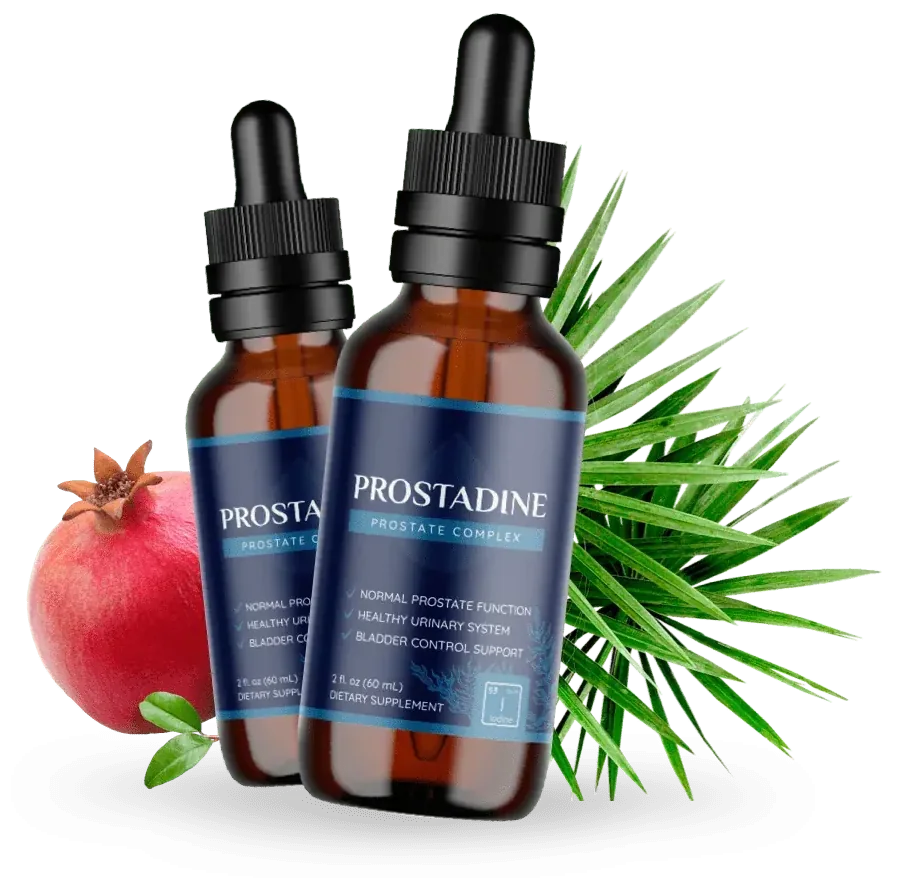
Prostadine: from $49 a bottle60 mL · 2 mL a day · free US shipping on 3 or 6 · 60-day money-back guarantee
See packsWhat doctors offer04
How BPH is managed
The NIDDK lists watchful waiting, alpha blockers, 5-alpha reductase inhibitors, minimally invasive procedures and surgery (NIDDK, Enlarged Prostate (BPH)). The Urology Care Foundation notes that doctors often begin with a symptom questionnaire, the AUA Symptom Index, also called the IPSS, and that mild symptoms may need only monitoring (Urology Care Foundation, BPH).
| Medicine | What it does | A point to know |
|---|---|---|
| Tamsulosin (alpha blocker) | Relaxes muscle in the prostate and bladder | May cause dizziness on standing; tell your eye surgeon you take it before cataract surgery (MedlinePlus, Tamsulosin) |
| Finasteride (5-alpha reductase inhibitor) | Prescribed for BPH; may control it but will not cure it | Symptoms may take at least 6 months to improve; side effects can include erection and sex-drive changes (MedlinePlus, Finasteride) |
A balanced diet rich in fruits and vegetables is described as good general advice (Urology Care Foundation, BPH), but nothing in these sources places a supplement among the options. If you are considering one, say so, and ask what your doctor thinks of it.
What to do now05
Three sensible next steps
- Take the seven-question symptom check and write down the score.
- Read what a doctor visit usually covers on the doctor visit guide, and bring the score and your medicine list.
- If you take, or are thinking of taking, any supplement for the prostate, read the medicines page first.
The aim is not to talk you out of anything. It is to put a diagnosis before a purchase, which is the order that serves you best.
- Enlarged Prostate (Benign Prostatic Hyperplasia). National Institute of Diabetes and Digestive and Kidney Diseases (NIH), 2024.BPH is a benign enlargement; it affects 5% to 6% of men ages 40 to 64 and 29% to 33% of those 65 and older. Scientists do not fully know why it occurs; aging and hormone changes are suspected. Researchers have not linked diet or nutrition to causing or preventing BPH. Symptoms include trouble starting a stream, weak or interrupted stream, nighttime urination and urgency, and symptom severity does not always match prostate size. Seek care right away if you cannot urinate at all, have painful urgent urination with fever and chills, see blood in the urine, or have significant lower abdominal or urinary tract pain. Treatments: watchful waiting, alpha blockers, 5-alpha reductase inhibitors, procedures and surgery. The page does not mention supplements.
- Benign Prostatic Hyperplasia (BPH): Symptoms, Diagnosis & Treatment. Urology Care Foundation (American Urological Association), 2024.Doctors often start with a symptom questionnaire, the AUA Symptom Score Index, also called the International Prostate Symptom Score (IPSS), to rate symptoms as mild, moderate or severe. Mild cases may need only monitoring; other options are prescription drugs, office procedures and surgery. A balanced diet rich in fruits and vegetables, weight loss and staying active may help. Check with a health care provider before starting or stopping treatments or supplements. Seek care promptly for blood in the urine, pain or burning, or inability to pass urine.
- Prostatitis: Inflammation of the Prostate. National Institute of Diabetes and Digestive and Kidney Diseases (NIH), 2014.Prostatitis is inflammation of the prostate and can be acute bacterial (sudden, severe, with fever and chills), chronic bacterial, chronic pelvic pain syndrome, or asymptomatic. Seek immediate care for a complete inability to urinate, painful and urgent urination with fever and chills, blood in the urine, or severe lower abdominal or urinary pain. Some symptoms can also signal more serious conditions, including prostate cancer, so a proper diagnosis matters.
FAQ06
Prostadine questions people ask
What does the prostate do?
It is a small gland below the bladder that surrounds the urethra and makes part of the fluid in semen. Because it surrounds the urethra, changes in its size can affect how you urinate.
What is BPH?
Benign prostatic hyperplasia is a non-cancerous enlargement of the prostate. It affects 5 to 6 percent of men aged 40 to 64 and 29 to 33 percent of men 65 and older (NIDDK, Enlarged Prostate (BPH)).
Does an enlarged prostate mean cancer?
No. BPH is benign and is not cancer, though both can occur together, and only a doctor can tell which is which. Persistent symptoms deserve a proper check, not a guess.
What is the difference between BPH and prostatitis?
BPH is enlargement; prostatitis is inflammation, sometimes from bacteria and sometimes with no clear cause. Prostatitis with fever and chills is urgent (NIDDK, Prostatitis).
Who wrote this07
Written and reviewed by
Pages built from the bottle photos, the info page and linked NIH, FDA, NCI, FTC and peer-reviewed sources.
Last updated . Read our editorial standards and how we check reviews. This website is run by a licensed U.S. retail desk for Prostadine, not by the manufacturer. We earn money when you buy through our order links.
Keep reading
More about Prostadine


Licensed U.S. retail desk — Prostadine
Ready to try Prostadine?
Check your medicines first, then pick a pack. Three or six bottles ship free in the US and cost less per bottle, and every pack carries the 60-day money-back guarantee.
- Secure checkout
- 60-day money-back guarantee
- Ships from the U.S., free on 3 or 6